What to Do When Amazon Lockers Are Full: Secure Delivery Options That Actually Work
Published August 1, 2025
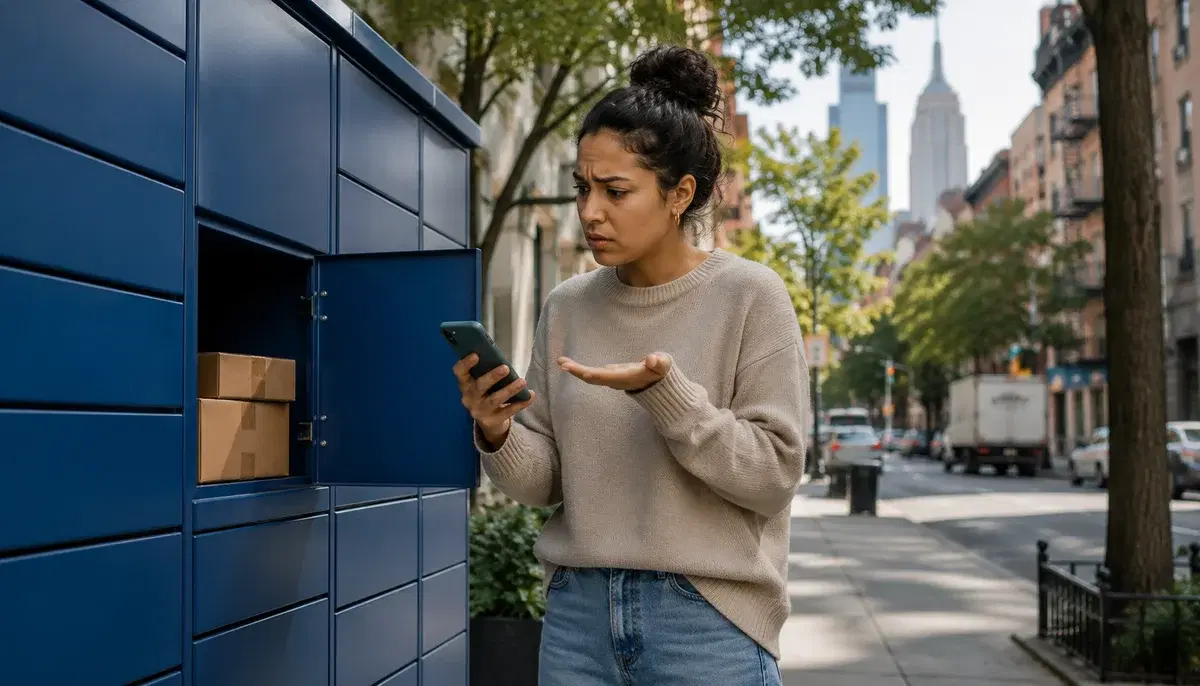
Updated 20.8.2026 Ever tried to ship something to an Amazon Hub Locker only to receive the dreaded “locker full” message? Amazon Locker shortages can derail delivery plans. When lockers fill up, packages are either delayed, misrouted to distant locations, or returned, often leading to Amazon missing packages, missed deliveries, and in some cases, stolen packages once they get rerouted into insecure holding areas.
With secure package receiving services by Delivery Amigo across all major cities and neighborhoods, you can receive your packages safely, on your schedule.
Experience worry-free package deliveries at a nearby Manhattan Delivery Amigo location!
The Rise of the Amazon Locker (and its Limits)
Amazon Lockers have been a game-changer in the last-mile delivery ecosystem. First introduced in 2011, they offered a secure alternative to home delivery, especially for urban dwellers without doormen or secure package rooms.
Their appeal lies in their 24/7 accessibility (for many locations), privacy, and reduction of package theft risk. Amazon has strategically placed thousands of these lockers in diverse locations, from grocery stores and pharmacies to apartment buildings and gas stations, aiming for maximum convenience.
The Driving Force: E-commerce Growth and Urban Density
The primary reason Amazon Lockers are frequently at full capacity is the explosive and sustained growth of e-commerce.
Global E-commerce Boom: Global retail e-commerce sales are projected to reach $6.86 trillion by the end of 2025, an 8.3% increase over 2024 Statista - worldwide retail e-commerce sales , with online shopping now reaching 2.77 billion people worldwide, about a third of the global population Statista- number of digital buyers worldwide.
High Online Shopping Penetration: This widespread and growing adoption puts immense pressure on all forms of delivery infrastructure, and lockers, a fixed and finite resource, are among the first to feel the strain when local order volume spikes.
Urban Living and Delivery Challenges: In densely populated cities like New York, individual home deliveries face numerous hurdles: lack of secure reception points, high rates of package theft, and constant traffic congestion. Lockers offered a perfect solution, leading to their rapid adoption in these areas. NYC residents are estimated to receive over 2.4 million packages citywide each weekday, according to a 2021 analysis by transportation consultant Charles Komanoff, cited by the Office of the Manhattan Borough President [source: Office of the Manhattan Borough President].
Why Your Locker is Full: Capacity and Peak Period Strain
While Amazon continually invests in expanding its locker network, the demand often outstrips supply, especially during specific times.
Peak Shopping Periods (Now Year-Round): Traditionally, "peak season" referred to the November-December holiday rush. However, in 2025, with events like Prime Day, Black Friday, Cyber Monday, Valentine's Day, and various seasonal sales, the distinction between "peak" and "off-peak" has blurred. Many retailers run promotions year-round, leading to consistently high package volumes.
First-Come, First-Served Logic: A fundamental challenge for locker management is that a basic "first-come-first-served" policy for standard shipping can quickly fill lockers, leaving no space for expedited packages. Amazon has addressed this using machine learning to predict locker demand and package "dwell time" (how long a package sits before pickup), combined with linear programming to reserve capacity for faster shipping options, an approach that produced a 9% year-over-year increase in locker throughput during the 2018 holiday season [source: Sethuraman et al., "Amazon Locker Capacity Management," INFORMS Journal on Applied Analytics, 2024] Even with this optimization, high-volume periods can still push individual lockers to capacity.
Limited Compartment Sizes: Lockers come in various sizes (small, medium, large), but they cannot accommodate all package dimensions. Oversized items, even if a locker has available space, simply won't fit, leading to rejection.
Uncollected Packages: Customers have a limited time, 3 days for Amazon Lockers [Sources: Amazon - How to use Amazon Locker] to pick up their packages. If parcels are not retrieved promptly, they remain in the lockers, occupying valuable space and contributing to the "full" status.
Increased Returns: Peak sales periods often correlate with an increased volume of returns.
Location-Specific Demand: Some locker locations, particularly those in highly populated residential areas or near transit hubs, experience consistently higher demand than others, making them more prone to reaching full capacity quickly.
The Ripple Effect: Overflow Issues and Their Costs
When your chosen Amazon Locker is full, it triggers a chain of inconveniences and potential costs:
Forced Rerouting/Delays: Amazon will attempt to reroute your package to a nearby available locker or, as a default, to your home address. This can lead to delays in receiving your package, especially if your home address is less secure or you are not available.
Increased Risk of Theft: If your package is rerouted to an unsecured home address, it immediately becomes vulnerable to "porch pirates."
Package theft remains a large, current problem: an estimated 104 million packages were stolen nationwide in 2025, representing $37 billion in total economic impact, $15 billion in direct consumer losses plus $22 billion in retailer refund/replacement costs [source: SafeWise, "2025 U.S. Package Theft Report"].
New York City ranked among the highest-loss metros for package theft in SafeWise's 2025 ranking. Separately, NYC's Department of Transportation estimates over 90,000 packages a day don't reach their intended destination, a figure covering missed and misdelivered packages generally, not specifically theft [source: NYC DOT, "Deliveries in New York City"]. When lockers fill up, more packages are pushed back into the less secure residential delivery network.
Wasted Time and Frustration: Discovering a full locker after a long wait, or having to track a rerouted package, consumes valuable time and generates significant frustration.
Environmental Impact: Rerouting or multiple delivery attempts due to full lockers contribute to increased fuel consumption and carbon emissions.
Lockers also support only Amazon shipments. If they're full, you may temporarily lose access to your package entirely, while UPS lost packages, FedEx stolen packages, and USPS missing packages continue under other carriers.
Common Carrier Issues by Service
Frustration with lobby package theft picking up around the holidays,and building cameras going unaddressed by management, is a commonly reported pattern in NYC apartment communities.
Residents also report Amazon missing packages repeatedly, or packages vanishing despite delivery confirmations. Many residents complain that even in‑building lockers or supers aren't reliable, with lost packages piling up during busy weeks.
Amazon missing packages
When a Locker is full, Amazon often reroutes to alternate sites, or worse, marks deliveries lost before even leaving the fulfillment center. In high‑volume areas, a backlog results in tracking updates that don’t match reality.
UPS lost packages
Misdelivery to the wrong address, including replacement packages reappearing on unsecured doorsteps, remains a recurring frustration reported by UPS customers.
FedEx stolen packages
Packages left in corridors, lobbies, or exteriors are attractive to thieves. Even buildings with lockers or cameras report thefts shortly after delivery, illustrating FedEx drop risks in urban apartments.
USPS missing packages
Mail theft has grown sharply in recent years. The Postal Inspection Service recorded over 52,000 high-volume mail theft attacks in FY2024 alone, a 156% increase since FY2019 with FY2025 on track for a similar volume [source: Postal Police Officers Association data via FOIA, cited in "USPIS Annual Report: Underlying Numbers Show a Postal System Rife with Crime," FedWeek, January 2026]. USPS parcels left at mail clusters or vestibules are often picked off, fueling USPS missing packages complaints.
Navigating the Overflow: Available Alternatives (and Their Limitations)
When your go-to Amazon Locker is full, what are your options?
Other Amazon Lockers/Counters: You can search for alternative Amazon Locker locations or Amazon Counters (often at retail stores) nearby. However, these too can fill up, or may not be as conveniently located.
Carrier-Specific Access Points:
UPS Access Points: Local businesses partnered with UPS (e.g., The UPS Store) can hold packages for pickup.
FedEx Hold at Location: Similar to UPS, FedEx has partnerships with retail chains like Walgreens or Dollar General for package pickup.
Limitations: These are carrier-specific, meaning you'd need to manage different pickup locations for different retailers. Their operating hours may also be limited, and they might not always be within easy walking distance.
USPS PO Boxes/General Delivery: For USPS parcels, a PO Box offers a secure, centralized location. However, they are limited to USPS packages, and require a trip to the post office during its operating hours.
Direct Delivery Instructions (Limited Usefulness): While you can provide specific instructions for home delivery, their effectiveness in preventing theft in dense urban areas or unstaffed buildings is often limited.
Building Concierge/Mailroom: If you live in a luxury building with a doorman or dedicated package room, this is an ideal solution. However, this amenity is unavailable to the vast majority of urban residents, particularly those in older walk-ups or rent-stabilized units.
These alternatives often come with their own set of constraints: they might be specific to one carrier, have inconvenient operating hours, be geographically dispersed, or lack the secure, self-service appeal of lockers.
Delivery Amigo: Your Local Solution When Lockers Are Full
In a landscape where Amazon Lockers are hitting capacity and other alternatives offer limited universality or convenience, Delivery Amigo emerges as a highly effective and consumer-friendly solution. Package receiving services by Delivery Amigo provide a robust, local alternative that is designed to handle the overflow and address the core challenges of urban package delivery.
How Delivery Amigo Works and Its Advantages:
Network of Local, Secure Locations: Delivery Amigo partners with a vast network of vetted local businesses (e.g., coffee shops, dry cleaners, convenience stores) in your neighborhood. These act as secure, manned package receiving and package storage points.
Accepts ALL Carriers (Including Amazon Overflow): This is a critical differentiator. Unlike Amazon Lockers or carrier-specific access points, Delivery Amigo accepts packages from any carrier – UPS, FedEx, USPS, DHL, and crucially, even Amazon deliveries that couldn't fit in a locker or were rerouted. You get one consistent, reliable address for all your online orders.
Eliminates "Full Locker" Frustration: By using a Delivery Amigo location as your delivery address, you bypass the risk of your Amazon Locker being full. Your package is guaranteed to be received by a human at a secure location, eliminating rerouting delays, theft, and the frustration of missed deliveries.
Flexible Pickup at Your Convenience: Once your package arrives at the Delivery Amigo location, you receive a notification. You can then pick it up at your leisure during the business's operating hours, which often extend beyond traditional post office times, including evenings and weekends.
PIN-Based Secure Retrieval: To ensure maximum security, package retrieval at a Delivery Amigo location requires a unique PIN provided only to you. This guarantees that only the authorized recipient can collect the parcel, mitigating the risk of unauthorized pickups or theft.
Affordable and Transparent Pricing: Delivery Amigo offers cost-effective subscription plans, starting as low as $7.50/month for 5 packages and $15/month for 15 packages
When your Amazon Locker shows "full capacity," Delivery Amigo provides a seamless, secure, and truly local alternative that simplifies your entire package receiving experience.
Discover more package storage and package receiving locations here.
Conclusion
The phenomenon of full Amazon Lockers is a clear indicator of the immense strain on urban package delivery infrastructure, exacerbated by the relentless growth of e-commerce and changing consumer habits. While lockers offer a valuable service, their finite capacity, especially during peak periods, creates significant challenges for consumers, leading to delays, rerouting, and increased vulnerability to package theft.
Navigating this overflow effectively requires proactive strategies. Solutions like Delivery Amigo offer a secure, local, all-carrier package acceptance network that lets consumers bypass the "full locker" dilemma.
Related Reading
The Complete Guide to Package Receiving Services