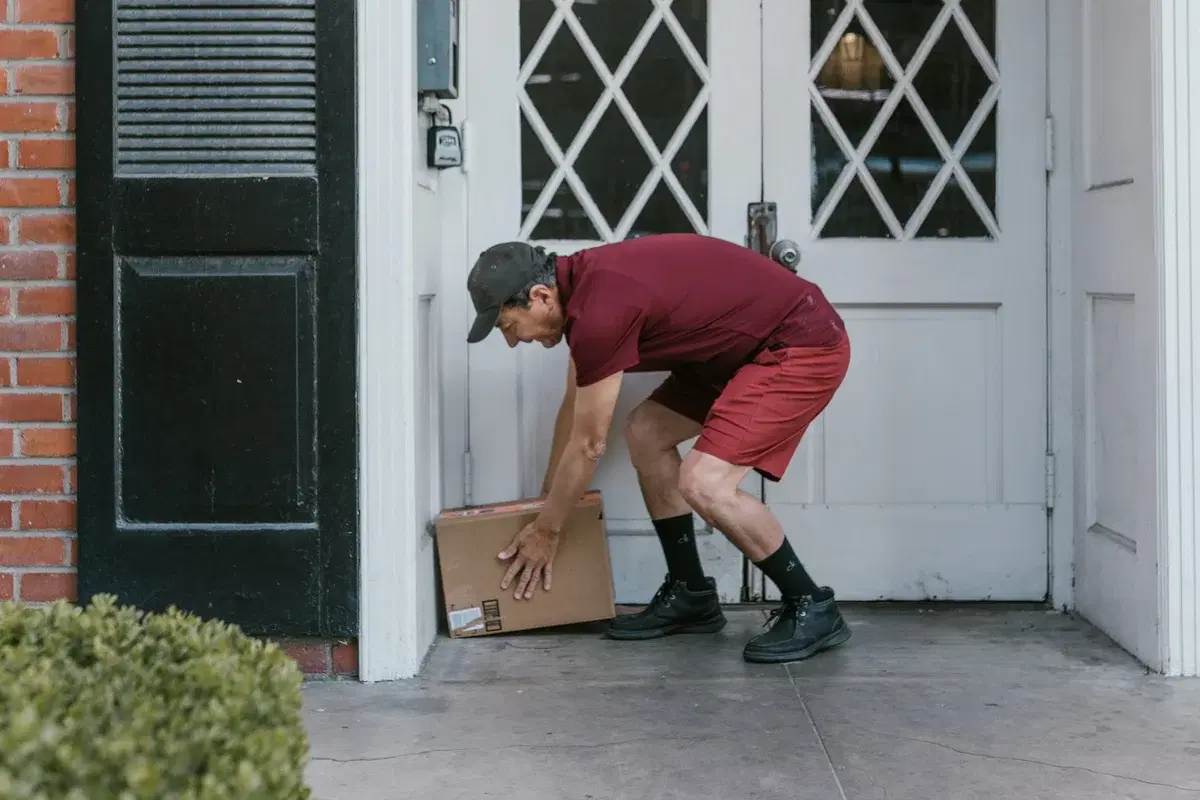
A solution for UPS lost packages
Published September 2, 2022
Updated 8.9.2026: You've been tracking a package all week. You get home, and the porch is empty, but the tracking says "delivered." That's the frustrating start of a UPS lost package mystery, and it's more common than most people think.
Package theft, by the numbers
An estimated 104 million packages were stolen nationwide in the past year, costing American consumers roughly $15 billion, about 250,000 stolen packages every day [source: SafeWise 2025 U.S. Package Theft Report].
Theft isn't spread evenly. People living in apartments and condos are more than three times as likely to have a package stolen as those in single-family homes, and urban residents are hit more often than suburban or rural ones [source: Security.org 2025 Package Theft Report].
Package theft has clear patterns by housing type and location; our complete guide to porch piracy breaks down the full data and the prevention tactics that work.
UPS delivery performance and tools
According to UPS, independent industry data from ShipMatrix shows UPS achieving a 97–99% on-time delivery rate during recent peak seasons, 98.9% during Cyber Week 2025, and 97.2% across December 2025 [source: UPS Newsroom, citing ShipMatrix].
DeliveryDefense Address Confidence. UPS's DeliveryDefense Address Confidence tool, part of its InsureShield shipping-protection suite, analyzes factors like address history and past loss data to generate a delivery-confidence score for each address [source: UPS Capital / InsureShield].
Network reach. UPS reports more than 5,700 UPS Store locations and more than 16,000 UPS Access Point locations across the U.S., putting roughly 90% of the U.S. population within about 5 miles of a UPS pickup or drop-off point [source: UPS].
Ground Saver. UPS's Ground Saver service includes Delivery Photo confirmation, giving recipients photographic proof of where a package was left, though this is only available when UPS completes final delivery itself, not when the last mile is handed to USPS [source: UPS Ground Saver].
What to do when you encounter a UPS lost package
Contact the package sender - they hold the invoice, tracking ID, and receipts.
Give it 24 hours. If the package hasn't arrived 24 hours after the expected delivery time, treat it as missing.
Check all exterior locations - porch, patio, garage, side and back doors.
Check with neighbors, who may have taken it in for you.
Contact UPS to file a missing-package claim.
Timeline: UPS allows the shipper or recipient to file a claim for a lost or damaged package up to 60 days after the scheduled delivery date [source: UPS]. When filing, you'll need the tracking number, shipment date, package weight, and accurate contact details, along with documentation such as receipts, invoices, or photos.
The UPS claims process
Provide package details (tracking number, weight, recipient contact info).
Indicate your role (sender, receiver, representative, or third party).
Support the claim with receipts, invoices, purchase orders, or damage photos.
Submit the claim through the UPS site.
Processing time. UPS says you can typically expect a claim resolution in 8 to 10 business days, unless additional investigation is required; delays are usually caused by missing documentation, such as a detailed merchandise description or required damage photos. Once a claim is approved, payment is sent to the shipper in about 3 days after the supporting documents are validated [source: UPS].
From the claims dashboard you can edit information and upload documents, submit new claims, review up to 270 days of claims history, export reports, and customize contact and dashboard preferences.
How to prevent UPS lost and stolen packages
1. Neighborhood watch. A neighborhood watch educates residents on security and safety and helps build safer, more secure neighborhoods.
2. Install a security camera. Camera footage can provide evidence in a UPS lost- or stolen-package situation and help identify package thieves.
3. Use UPS pickup points. Rerouting deliveries to a UPS Access Point or UPS Store and requiring a signature or PIN for pickup ensures the package goes to the right person [source: UPS].
4. Smart risk scoring. UPS's DeliveryDefense technology uses machine learning to analyze delivery addresses and historical loss data to produce a risk score; packages headed to high-risk addresses can be rerouted to a secure pickup location [source: UPS].
5. Avoid descriptive packaging and request delivery photos. Thieves are more likely to target boxes that reveal what's inside, so plain packaging keeps contents discreet. Services like UPS Ground Saver provide a Delivery Photo showing where a parcel was placed.
6. Shipping insurance for high-value items. UPS automatically covers parcels up to $100 in declared value at no charge. Beyond that, declared value costs $5.10 flat for $100.01–$300, then $1.70 per additional $100 [source: UPS Rate and Service Guide — Declared Value].
Importantly, UPS's own Terms and Conditions of Service state that declared value is not insurance — it's a contractual cap on UPS's liability, and UPS still requires proof that a loss or damage was UPS's fault before paying. Once a package is scanned "delivered," UPS generally considers its liability ended, so declared value typically does not cover porch piracy or theft after delivery. Third-party insurers, including UPS Capital's own InsureShield, offer broader protection that can include post-delivery theft without requiring proof of carrier fault.
7. Use a package receiving service. Why investigate a UPS lost package at all? Prevention beats the cure, which brings us to Delivery Amigo.
What is Delivery Amigo?
A package receiving and package acceptance service is a safe location to receive your packages, a shop or store where your deliveries are accepted and held until you pick them up at your convenience. Delivery Amigo is an easy, convenient way to get packages delivered to a trusted location near you, from your neighborhood coffee shop to a convenience store or restaurant. It accepts deliveries from every major carrier, not just UPS, so USPS, FedEx, and Amazon orders are covered too.
Delivery Amigo operates in cities including NYC, Los Angeles, San Francisco, Houston, Chicago, Seattle, Dallas, Austin, Washington DC, Miami, Boston, Denver, Las Vegas, Jersey City, and Philadelphia.
How Delivery Amigo works
Find a package receiving location that matches your hours and distance needs.
Choose from our monthly subscriptions.
Pay and receive the full package acceptance address plus a unique PIN for pickup.
Get notified when your package arrives, and collect it at your convenience with your PIN.
Pricing: subscriptions start at $7.50/month for 5 packages, or $15/month for 15.
Start your search for nearby Delivery Amigo package receiving services. For more on handling packages stolen after a "delivered" scan, see our guide on UPS stolen packages.
Frequently Asked Questions
What should I do if UPS shows my package as delivered but I never received it?
First, contact the package sender for tracking and invoice details. If the package hasn't arrived 24 hours after the expected delivery time, check all exterior doors, the porch, patio, and garage, and ask neighbors if they received it on your behalf. If still missing, you or the sender can file a UPS claim.
How long do I have to file a UPS lost package claim?
UPS allows claims to be filed up to 60 days after the scheduled delivery date for lost or damaged packages. Filing promptly with the tracking number, shipment date, package weight, and supporting documentation like receipts or photos improves the odds of a successful claim.
Does UPS's automatic coverage count as insurance?
No. UPS's automatic $100 coverage and any additional declared value are liability caps, not insurance in the traditional sense. UPS requires proof that the loss was the carrier's fault before paying a claim. Third-party options, including UPS Capital's InsureShield, offer broader protection such as coverage for packages stolen after delivery.
How can I prevent UPS packages from being lost or stolen in the future?
Options include rerouting deliveries to a UPS Access Point or UPS Store, requiring a signature or PIN for pickup, using a package receiving service, installing a camera, avoiding descriptive packaging, and requesting delivery photo confirmation.